The Impact of Technology on Our Lives: A Double-Edged Sword
Author: Admin
July 15, 2025
Article
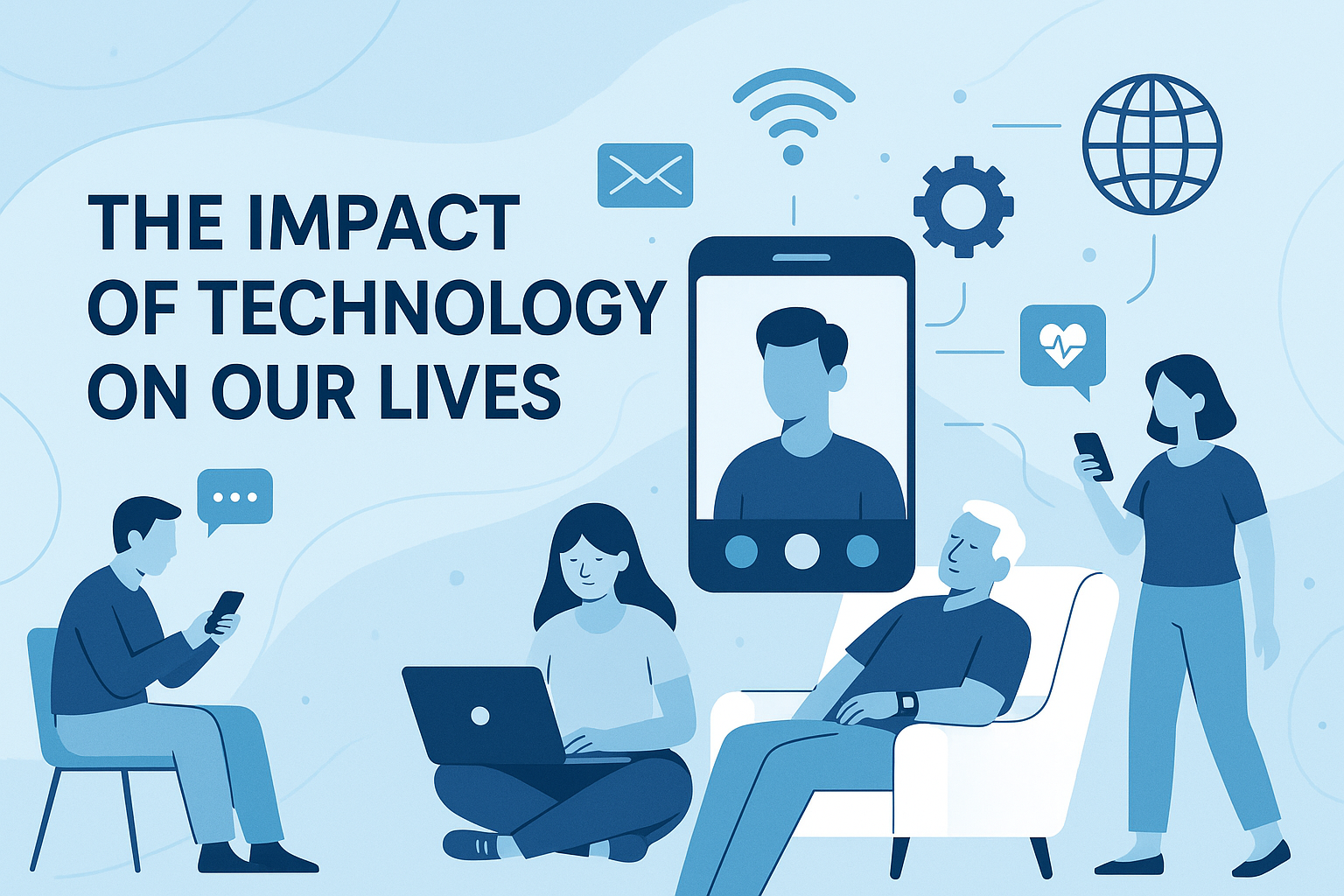
In today’s fast-paced world, technology has woven itself into the fabric of our daily lives. From the moment we wake up to the moment we fall asleep, we interact with devices and systems that were unthinkable just a few decades ago. While technology has undeniably improved our quality of life, it also presents new challenges that society must navigate carefully.
How Technology Has Transformed Our Lives
1. Communication Revolution
Gone are the days of waiting for a letter or being tied to a landline. With smartphones, video calls, and messaging apps, we’re more connected than ever. Families and friends separated by continents can now share moments in real-time. Social media has amplified this by giving everyone a platform to express themselves and build communities.
2. Access to Information
The internet has democratized information. Whether it’s learning a new language, researching a medical condition, or exploring ancient history, knowledge is now at our fingertips. Online education platforms and digital libraries have made learning accessible to anyone with an internet connection.
3. Healthcare Advances
From AI-assisted diagnostics to robotic surgeries and wearable health monitors, technology has revolutionized the healthcare sector. Early detection of diseases, personalized treatments, and telemedicine have made healthcare more efficient and accessible.
4. Work and Productivity
Remote work, automation, and collaboration tools like Zoom, Slack, and Asana have redefined the workplace. Businesses can now operate across time zones, and employees enjoy greater flexibility, often leading to increased productivity and better work-life balance.
5. Everyday Convenience
Smart homes, GPS navigation, online banking, and e-commerce have made life more convenient. We can control our thermostats from our phones, shop for groceries online, and pay bills without leaving our homes.
The Other Side of the Coin
While the benefits are clear, the impact of technology isn’t purely positive.
1. Digital Addiction and Mental Health
Constant notifications, social media comparisons, and screen time overload can lead to anxiety, depression, and reduced attention spans. The need for digital detoxes is growing as people seek to regain control over their tech usage.
2. Privacy Concerns
With every click and swipe, we leave a digital footprint. Data breaches, surveillance, and misuse of personal information have raised serious questions about privacy in the digital age.
3. Job Displacement
Automation and AI have replaced many traditional jobs, especially in manufacturing and service sectors. While technology creates new jobs, the transition can be painful and requires significant reskilling.
4. Social Disconnect
Ironically, while we are more digitally connected, many feel more isolated than ever. Face-to-face interactions are diminishing, and digital conversations often lack the depth and nuance of in-person communication.
Striking a Balance
The key lies in using technology mindfully. Governments, educators, tech companies, and individuals all have roles to play in ensuring that technological progress benefits everyone:
Education: Teaching digital literacy and responsible tech use from a young age.
Policy: Implementing laws that protect user data and promote ethical AI.
Innovation: Creating technologies that solve real-world problems without exacerbating inequality.
Mindfulness: Encouraging personal habits that balance online and offline life.
Final Thoughts
Technology is neither good nor bad—it is a tool. Its impact on our lives depends on how we choose to use it. As we continue to innovate, we must stay grounded in values that prioritize human well-being, equity, and sustainability. Only then can we harness the true power of technology to build a better future for all.


